
Artificial intelligence is arguably the most transformative technology of our generation. It promises to revolutionise healthcare, dramatically improve productivity, change how businesses operate and potentially solve problems that have challenged humanity for decades.
Yet almost every conversation about AI seems to focus on what we stand to lose. Our jobs. Our privacy. Our independence. Perhaps even our ability to distinguish what's real from what's artificial. Some of these concerns are entirely justified. We should absolutely be questioning how AI is developed, regulated and deployed.
But I think we're overlooking another equally important question.
If artificial intelligence creates trillions of dollars in new wealth, who actually gets to benefit?
Will this be a technological revolution that genuinely improves prosperity across society? Or will it become perhaps the greatest concentration of private wealth we've ever witnessed?
A recent announcement from AI company Anthropic got me thinking about this, and about a country whose approach to wealth creation I've admired for many years. That country is Norway.
An unexpected move from one of AI's biggest players.
On 18 October 2026, Anthropic, the company behind the Claude AI platform, made an announcement that genuinely caught my attention. In its official announcement, Investing in the Public Benefit – Anthropic, the company outlined plans to establish the Anthropic Public Benefit Fund, a potentially significant step towards ensuring that some of the extraordinary wealth generated by artificial intelligence benefits the wider community. The proposal is significant. Subject to shareholder approval, Anthropic intends to allocate 5% of its shares to a new corporate-owned fund dedicated to delivering broader public benefits. As the company's valuation grows, its board could allocate additional equity to the fund, potentially increasing its financial capacity over time. At Anthropic's reported May valuation, the initial 5% allocation would represent approximately US$48 billion in equity value. That's a substantial commitment by any measure. Of course, there's an important distinction here. This is the estimated value of a proposed ownership stake, not US$48 billion in available cash. The amount ultimately available to support public initiatives will depend on the fund's structure, the value and liquidity of its holdings, and how those assets are managed.
Anthropic has suggested that the fund could support charitable organisations, address workforce disruption caused by AI, and potentially make direct financial distributions to particular populations. The company has also announced a US$200 million commitment to studying and addressing AI's impact on the labour market.
Its founders and employees have made separate philanthropic equity commitments, and Anthropic says that, collectively, approximately 20% of its shares are now intended to support public benefit initiatives. There are still important questions about governance, oversight and what measurable benefits will ultimately be delivered. Nevertheless, I think this deserves more attention than it has received.
In an industry regularly criticised for concentrating enormous wealth and influence, here's a company proposing to dedicate a meaningful portion of its financial value to the wider community. That's worth discussing. And it reminded me of a very different, but fascinating, approach to wealth creation.
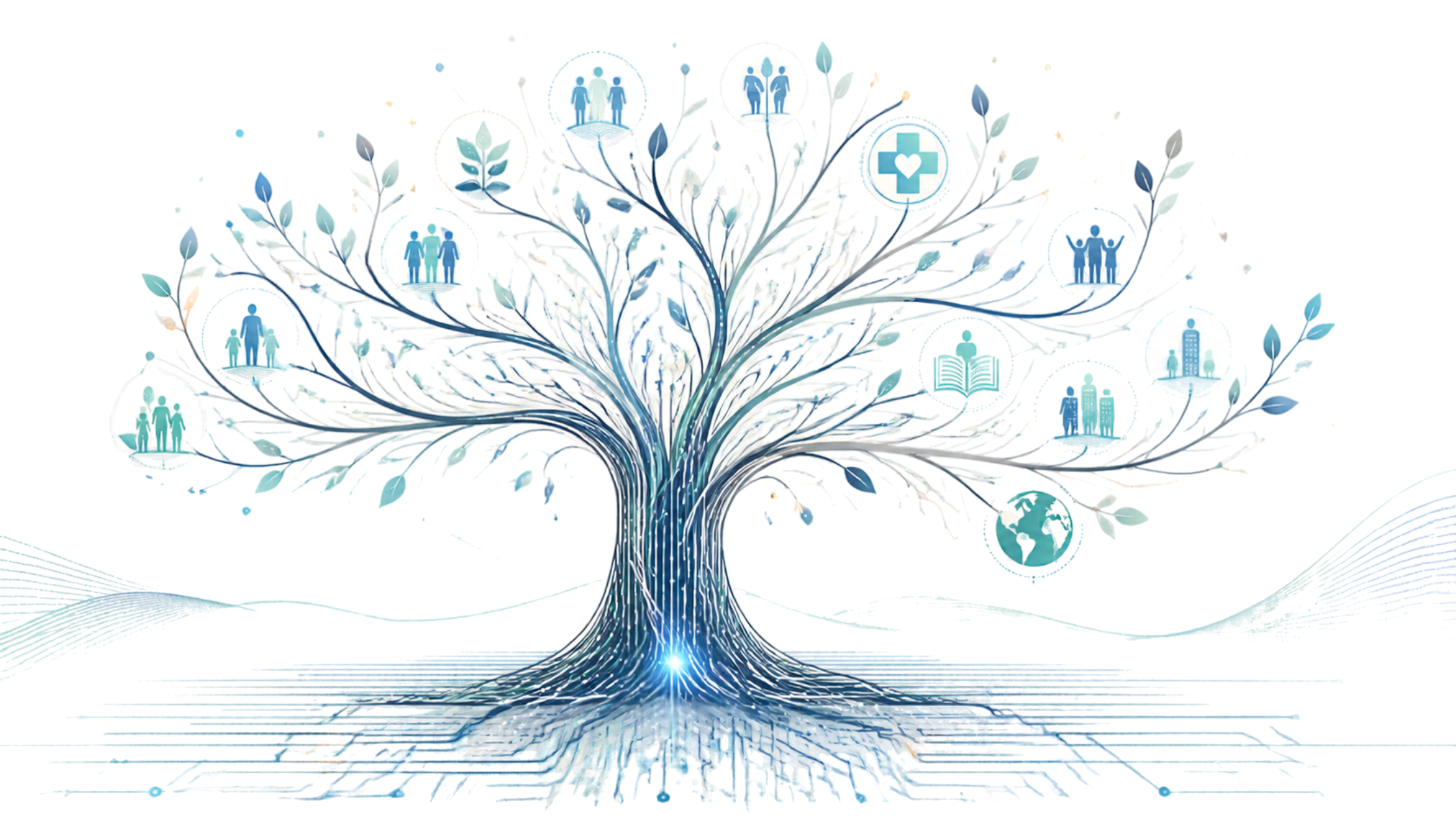
What Norway understood about wealth that the rest of us could learn from.
I've long been an admirer of Norway's sovereign wealth fund. For anyone unfamiliar with it, the story is quite remarkable. When Norway discovered enormous oil and gas reserves in the North Sea, it faced a decision familiar to many resource-rich countries. It could spend the revenue as it arrived, delivering immediate economic benefits, or it could invest a substantial portion for the long-term benefit of its population. Norway chose to think generations ahead. Legislation establishing the foundations of what became the Government Pension Fund Global was passed in 1990, with the first capital deposited in 1996.
Instead of relying solely on continued petroleum production, Norway invested its resource revenues in a diversified global portfolio of shares, bonds, real estate and renewable energy infrastructure. Over time, this evolved into one of the world's largest sovereign wealth funds, worth more than US$2 trillion. That's an extraordinary pool of wealth for a country with a population of around 5.6 million people. The fund isn't a personal bank account for Norwegian citizens, nor does everyone receive an annual cheque from it. Instead, it is publicly owned financial wealth, managed under a long-term investment framework, with transfers supporting the national budget and helping finance government services. The aim is not simply to make Norway wealthy today. It is to ensure that future generations benefit from resources extracted decades before they were born.
I've always thought there's something incredibly sensible about this.
Norway recognised that it had a valuable economic opportunity, but also understood that without careful planning, much of that opportunity could disappear through short-term spending. It converted finite natural resources into an enduring financial asset. And here's where I think things get interesting. Is AI the new oil? Not quite. But the comparison raises an important question. There's an obvious temptation to describe artificial intelligence as the new oil. Economically, however, they're fundamentally different.
Norway's petroleum reserves were natural resources subject to the country's ownership and taxation framework. Its sovereign wealth fund was built from government petroleum revenues and belongs to the Norwegian state. AI is not a naturally occurring national resource. It's a technology created through scientific research, entrepreneurship, intellectual property, enormous private investment and human ingenuity. Likewise, Anthropic's Public Benefit Fund is not a sovereign wealth fund. It is a corporate-owned structure, with the proposed equity held within a company-controlled entity rather than being transferred to public ownership. Those are substantial differences, and we shouldn't pretend otherwise.
But I don't think the two models need to be identical for us to learn something from the underlying philosophy. Both raise a question about what happens when an extraordinary economic opportunity emerges.
Who captures the wealth? Who benefits over the long term? And how much thought do we give to future generations?
Norway developed a mechanism to convert temporary resource revenues into lasting national financial wealth. Could the AI revolution prompt us to think just as ambitiously about long-term prosperity?
The uncomfortable truth about who creates AI's value
One of the great paradoxes of artificial intelligence is that its development relies on both extraordinary private investment and an enormous foundation of collective human knowledge. Modern AI systems build on decades of research conducted in universities, government institutions and private laboratories. Public funding has contributed significantly to foundational scientific discoveries. AI systems have also been trained on vast collections of human-generated material, including books, academic publications, software, websites and other creative and intellectual work.
Much of the technology's eventual economic value will also depend on its adoption by ordinary businesses, workers, healthcare professionals and the wider community. None of this diminishes the contribution of the entrepreneurs and investors who are spending billions to develop these systems. They take substantial financial risks. They employ highly skilled people. They build products that can genuinely transform lives. And they deserve to be rewarded.
I'm a strong believer in entrepreneurship, innovation and the importance of allowing successful businesses to generate returns on their investments. But here's the question I'm struggling with: does rewarding innovation necessarily mean that the overwhelming majority of its financial benefits should remain concentrated among a relatively small number of shareholders?
Imagine a future where AI enables businesses to produce twice as much with half the workforce. The productivity gains could be extraordinary. But what happens to the employees whose roles disappear?
What happens to communities heavily dependent on industries that become automated? And what happens if the economic value created by those productivity improvements flows predominantly to those who own the technology? Society could become substantially wealthier on paper, while many individuals become economically less secure. That's not an inevitable outcome. But it is a possibility worth taking seriously.
What if we created a public wealth fund for the AI age?
This is where I believe the Norway example becomes especially interesting. What if governments began exploring ways to capture and invest a modest proportion of the economic prosperity generated by AI? Not necessarily through compulsory transfers of technology company shares. And certainly not by discouraging innovation or making it commercially unattractive to develop these technologies.
There are several possible approaches. Governments could invest strategically in emerging technologies and retain financial interests in successful ventures. Tax systems could be designed to ensure that substantial economic gains contribute appropriately to public revenue, without undermining investment incentives. Technology companies could establish voluntary equity-backed public benefit commitments similar to Anthropic's proposal. Or public and private organisations could work together to create long-term investment vehicles that support communities affected by major technological disruption.
The challenge would be getting the design right. A poorly structured system could reduce investment, discourage innovation or become another expensive bureaucratic exercise. A well-governed investment fund, by contrast, could build financial assets over time rather than simply spending revenues as they arise.
Imagine the potential benefits. Additional funding for healthcare and disability services. More accessible education and workforce retraining. Greater investment in preventative healthcare, regional communities and scientific research. Support for people displaced from employment as industries evolve. And perhaps, over time, a public financial asset that continues generating returns for future generations.
Rather than relying entirely on redistributing wealth after it has been created, what if society also participated in building and owning some of that wealth? That's the idea I find most compelling.
What this could mean for healthcare, rehabilitation and the workforce
Working in healthcare and rehabilitation, including through my work in co-designing Perci Health, I can see enormous potential for AI to improve people's lives. We are already seeing opportunities to reduce administrative workloads, improve access to information, support clinical decision-making and free up professionals to spend more time delivering direct care. In an industry where workforce shortages, rising costs and increasing demand are constant challenges, those improvements could be significant.
But technological progress doesn't automatically translate into better services or more equitable access. A healthcare provider might use AI to improve productivity and reduce costs. An insurer might use it to streamline claims management. A government agency might automate significant portions of administrative work. Those changes could make systems more efficient. But will the savings be reinvested into improved patient outcomes, better access to services and more effective rehabilitation? Or will they simply become another opportunity to reduce expenditure? The same question applies to the workforce.
We talk extensively about retraining people for the AI economy, but retraining requires resources, time and genuine employment opportunities. If companies generate extraordinary financial returns through workforce automation, it seems reasonable to at least debate whether some of those gains should help support the workers and communities experiencing the disruption. Efficiency is valuable. But surely the ultimate measure of technological progress should be whether it improves people's lives.
Is Anthropic genuinely changing the conversation, or is this clever corporate PR?
I suspect some people will dismiss Anthropic's announcement as a public relations exercise. And perhaps some scepticism is warranted.
A proposed multibillion-dollar equity commitment certainly attracts positive headlines. But until money is invested, distributed or used to deliver tangible community outcomes, it's difficult to assess its real impact.
There are legitimate questions that still need answering. Who will make decisions about the fund's investments and distributions? How independently will it operate? What populations will benefit? How will success be measured? And how transparent will Anthropic be about its activities? These aren't minor details. They will ultimately determine whether the initiative becomes a meaningful example of corporate responsibility or simply another well-promoted commitment.
But I also think we should be careful not to become so cynical about large technology companies that we automatically dismiss potentially constructive initiatives. AI companies are frequently criticised for what they might take away from society. When one proposes setting aside a meaningful stake in its own financial success for broader public benefit, surely that's worth recognising.
I don't believe corporate philanthropy can replace effective public policy. Nor should the future wellbeing of communities depend entirely on the generosity of billionaires or company boards. But perhaps initiatives like Anthropic's can help start a more ambitious conversation about how the economic benefits of AI should be shared.
We need to start asking bigger questions
Norway didn't build its sovereign wealth fund overnight. It made a series of decisions over decades, based on the principle that extraordinary national wealth should be managed responsibly and with future generations in mind.
It's a philosophy I've admired for a long time. And while AI presents a very different set of economic and political circumstances, I think there is something worth learning from that approach.
We are potentially at the beginning of an extraordinary period of productivity growth and wealth creation. Some projections will undoubtedly prove exaggerated. Some companies will fail. The social and economic effects will be far more complex than today's headlines suggest. But if even a portion of AI's predicted economic potential materialises, the consequences could be profound.
We spend enormous amounts of time discussing how to regulate AI, how to manage its risks and how to prepare workers for disruption. All essential conversations. But perhaps we need to spend just as much time discussing how ordinary people and future generations can participate in the prosperity AI might create.
Anthropic's Public Benefit Fund is not the answer to all these questions. It isn't Norway's sovereign wealth fund, and it shouldn't be presented as one. But it is an interesting proposal from one of the companies at the forefront of this technological revolution. And perhaps its greatest contribution will be encouraging us to think differently about the relationship between technological success and public benefit. Because the greatest failure of artificial intelligence might not be that machines eventually perform much of the work humans do today. It might be that we create unprecedented wealth and productivity, but fail to ensure that those gains translate into better lives for the people whose work and communities are transformed. That would be an extraordinary missed opportunity.
The question isn't simply whether AI will make the world wealthier. The real question is: who exactly gets to share in that wealth? And perhaps, like Norway did decades ago, we should be thinking about the answer now, rather than leaving it for future generations to work out.
And this raises a question much closer to home for us at Perci Health. While we're a small Australian AI company, not a trillion-dollar technology giant, the underlying principle is just as relevant. If companies like ours succeed commercially through AI, should we also be thinking about how some of that success can contribute to broader social good? And if so, what would make the greatest difference?
We'd love your perspective
Should AI companies, including smaller businesses like Perci Health, commit a portion of their success to broader community benefit?
If so, where do you think that contribution would make the greatest difference?